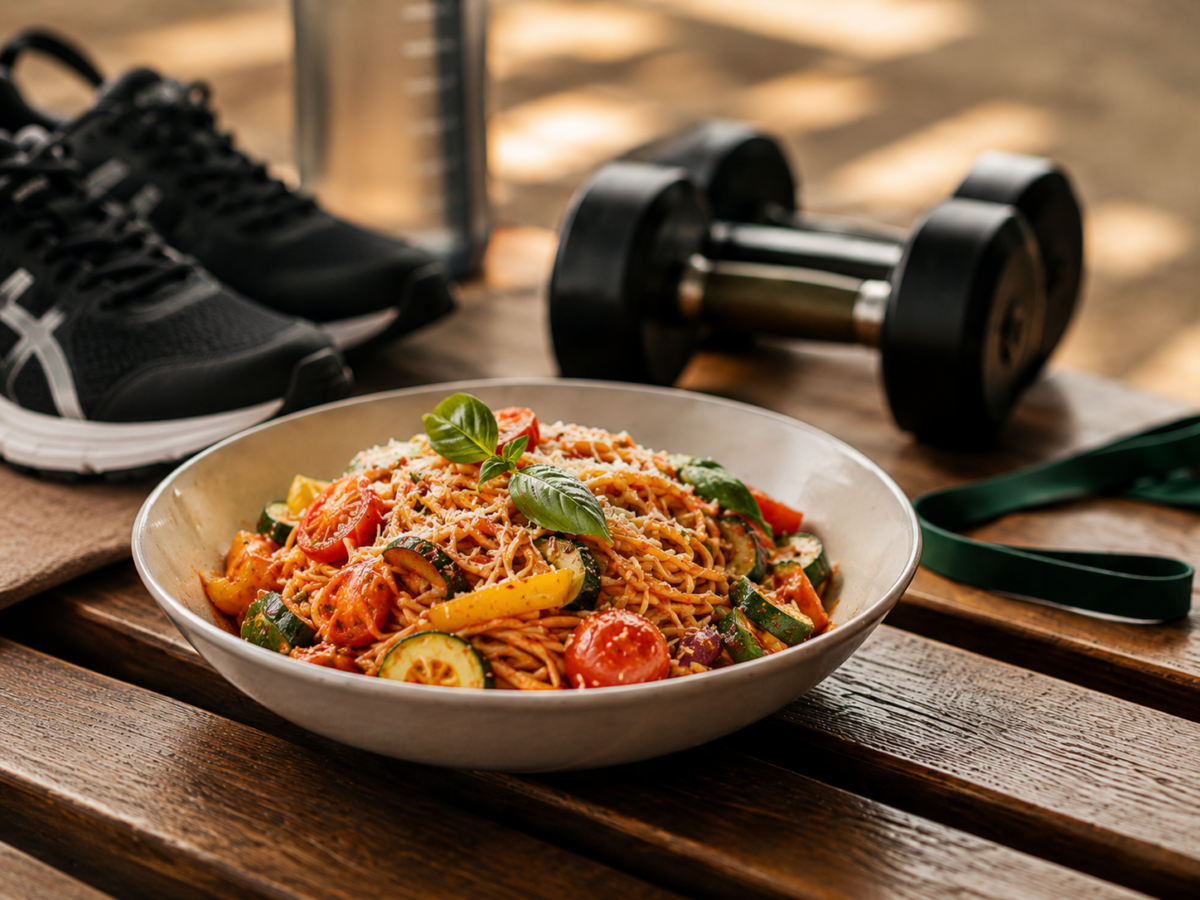
Fifty years after the Montréal 1976 Olympic Games, pasta remains one of the symbolic foods in the relationship between nutrition and sports performance. That period marked a cultural turning point: after years in which athletes’ diets had been dominated by models rich in protein and fat, the work of Italian sports physicians who supported the Mediterranean diet, together with the results achieved by champions such as Pietro Mennea and Klaus Dibiasi, helped draw the attention of experts to the role of carbohydrates in sport. It was also from there that the progressive “Mediterraneanisation” of sports nutrition began, with pasta at the centre of a new way of thinking about athletes’ energy.
Today, the debate is once again relevant because sports science encourages a more precise approach to carbohydrates. In this context, pasta can be part of the diet of those who train, compete or practise physical activity regularly, when included with attention to meal quality, quantity and timing.
At a time when low-carb, ketogenic and high-protein diets continue to influence amateur athletes too, pasta offers a simple and contemporary answer: it is plant-based, accessible, versatile, familiar in many food cultures and easy to combine with proteins, vegetables, legumes, olive oil, fish, nuts or fresh cheeses.
From Carbophobia to Carb Intelligence
Pasta has often been drawn into the debate around low-carbohydrate diets. Sport, however, is an area where energy availability matters. Several scientific studies and nutrition guidelines for professional athletes and amateur sportspeople remind us that food is the body’s fuel, and that an adequate diet helps optimise physical work, support training and replenish losses linked to physical and mental stress. The same document also underlines that there are no magic foods or special diets capable, on their own, of improving performance: what matters is a healthy, adequate diet that is consistent with the level of activity.
For those who engage in moderate physical activity, diet can follow a balanced pattern suited to everyday life. As the duration, intensity and frequency of training increase, carbohydrate needs increase too.
The most recent evidence on low-carb and ketogenic diets also invites us to avoid oversimplification. A meta-analysis published in 2026 in Nutrients shows that trained athletes can metabolically adapt to low-carbohydrate regimes in certain contexts, while also highlighting possible performance drops during the initial adaptation phase. The authors conclude that, especially when high intensity and competitive readiness are required, carbohydrate periodisation strategies are more appropriate than rigid and indiscriminate elimination.
More Pasta in the Mediterranean Diet? Data Help Overcome Prejudice
Further confirmation of the importance of overcoming carbophobia in sport comes from a study by the University of Milan, published in the International Journal of Food Sciences and Nutrition. The research assessed the effect of two eight-week Mediterranean diet interventions in non-professional athletes engaged in strength training. In a randomised crossover design, participants followed a higher-carbohydrate Mediterranean diet, with at least five servings of pasta per week and around 55-60% of daily energy intake from carbohydrates, and a reduced-carbohydrate Mediterranean diet, with fewer than two servings of pasta per week and around 40-45% of energy from carbohydrates.
The results showed no negative effects of increased carbohydrate intake on physical performance, body composition or strength. Although the sample was limited, the finding is relevant because it confirms an important message for those who practise sport: increasing carbohydrate intake within a balanced Mediterranean dietary pattern does not compromise sports goals and can be compatible with strength, body composition and overall wellbeing.
For amateur athletes, often exposed to extreme dietary trends and advice of varying quality, a more balanced reference point is needed. Within a healthy, Mediterranean, performance-oriented dietary model, pasta can have a place as a simple, familiar source of energy compatible with sports practice.
Post-Workout Recovery: The Role of Carbohydrates and Protein
After training, the body needs to repair muscles and replenish energy stores. Proteins contribute to muscle repair and adaptation; carbohydrates help restore the glycogen used during exercise, especially after intense activity or closely spaced sessions. A review published in 2025 in Sports Medicine underlines that carbohydrate intake is essential for glycogen restoration, especially in the first hours after exercise, and that proteins, fluids and electrolytes complete the picture of nutritional recovery, particularly when athletes have limited time between sessions.
From this perspective, a well-constructed pasta dish can become a practical ally for recovery. As the base of a complete meal, pasta makes it possible to combine carbohydrates, proteins, quality fats, micronutrients and pleasure in one single eating occasion.
Inside a Plate of Pasta: Energy, Low Fat and Simplicity
In the collective imagination, pasta is often associated with excess calories or a “sugar load”. Official food composition databases, however, tell a more balanced story. According to ANSES-CIQUAL 2025, the French reference table for the nutritional composition of foods, cooked pasta is a predominantly carbohydrate-based food with a very low fat content. Its energy value can vary depending on the shape, degree of cooking and amount of water absorbed, but its nutritional profile remains consistent: energy from carbohydrates, low fat and great versatility in pairings.
This profile makes pasta a useful base for the diet of those who practise sport. Before physical activity, it can help provide energy; after training, it can help replenish carbohydrate stores; in everyday life, it can fit into balanced meals, especially when paired with ingredients such as vegetables, legumes, olive oil, fish, tomato, herbs and nuts.
Pasta-Based Plant-Based Diets for a New Generation of Athletes
Among new generations of athletes, the pursuit of performance is increasingly accompanied by flexible, sustainable dietary choices compatible with plant-based or plant-forward models. Pasta fits naturally into this scenario: it is made from plant-based ingredients, stores easily, crosses food cultures and can be used to build dishes suited to different routines, tastes and nutritional needs.
Recent literature also confirms that a predominantly plant-based diet, if well planned, can be compatible with sports practice. A randomised crossover study published in 2026 in Nutrition Journal compared a plant-based diet and an omnivorous diet in recreational runners and strength-training athletes. After four weeks on each dietary model, no significant differences emerged in the 12-minute run or in the composite strength score.
A diet rich in plant foods can support physical activity when properly planned and when energy and protein requirements are considered. In this scenario, pasta stands out as a simple, accessible and culturally versatile food, able to adapt to different sports routines and dietary styles.
From Competition to Everyday Life: Pasta in Athletes’ Choices
The habits described by athletes help bring the topic into real life. Across disciplines, cultures and generations, pasta appears as a pre-competition meal, a recovery dish, a comfort food or a family ritual, entering athletes’ everyday lives with different meanings.
In football, examples come from many different geographies: US captain Tim Ream told GQ that for years he had used combinations of pasta and protein as a pre-match meal, from pasta with chicken or fish to more recent versions with whole-wheat pasta, sauce, white fish, avocado and banana. In Serie A, Scott McTominay thanked his chef for teaching him how to prepare dishes including spaghetti with clams, while Marcus Thuram, born in Reggio Emilia, said he “grew up eating pasta”. From Brazil, other cultural signals emerge: Wesley, now at Roma, tried his hand at carbonara. Among the most global names, Kylian Mbappé has been described by the media through both his salmon pasta and his love of carbonara; Mohamed Salah is linked to an identity-rich dish such as kushari, an Egyptian speciality made with rice, lentils and pasta, and also went viral in a light-hearted exchange offering to go to dinner with Federico Chiesa. Lamine Yamal has also been associated with his “passion for pasta” and an Italian dinner.
From football to tennis, the thread remains clear. Jannik Sinner has said that before matches he chooses simple pre-match meals, with carbohydrates such as pasta or rice accompanied by light proteins. Carlos Alcaraz has said that around an hour and a half before matches he eats a very personal recipe based on pasta, 100% cocoa cream, dates and olive oil, designed to provide energy. Iga Świątek brought to Wimbledon the Polish tradition of pasta with strawberries and yogurt, turning it into a small global story of taste and identity. Tennis greats have also often described a positive relationship with pasta: Roger Federer has called it a regular presence before matches, while Rafael Nadal has shared his pasta with prawns recipe.
In endurance sports, pasta retains an equally recognisable role. Eliud Kipchoge, two-time Olympic marathon champion, bases his diet mainly on local foods such as ugali; when he travels and cannot access it, he often chooses pasta as a practical alternative. His case shows how, alongside local food traditions, pasta can become a simple and familiar source of energy even for those who practise long-duration sports.
Even the guidelines of the United States Olympic and Paralympic Committee provide institutional confirmation of the role of carbohydrates in sport. The USOPC fact sheet dedicated to carbohydrates reminds athletes that the body’s glycogen stores are limited and that, when training once or more times a day, they may need to be replenished throughout the day. Recommended sources also include whole grains such as whole-wheat pasta, alongside brown rice, oats, whole-grain bread and cereals, starchy vegetables and fruit.
At a time when sports nutrition is often described in terms of restriction, control and sacrifice, many athletes continue to describe pasta as a practical, familiar food compatible with training, competition and recovery.
Pasta and Conviviality: When a Meal Becomes Part of Recovery
Conviviality also belongs to the relationship between pasta, sport and everyday life. For those who train and compete, the meal can become part of the routine: a moment of pleasure, identity, decompression after effort and return to normality.
A study conducted by the Behavior & Brain Lab at IULM University investigated the social value of pasta, showing how eating it together can generate positive emotions and strengthen the connection between people. This result is consistent with a broader international literature on the value of shared meals: the Oxford University study Breaking Bread: The Functions of Social Eating associated eating together with greater life satisfaction, perceived happiness and sense of belonging, while more recent global research confirms the link between shared meals and subjective wellbeing. Conviviality thus becomes part of a broader balance, in which food, psychological wellbeing and relationships all find their place at the table.
This dimension also emerges in the words of athletes. In 2026, after his victory in China and his return to Bologna, driver Kimi Antonelli said he wanted to celebrate with friends and family by eating pasta, especially tagliatelle. It is a simple statement, far from the technical language of sports nutrition, but a meaningful one: after the pressure of competition, pasta becomes the food of return, celebration and sharing.
Fewer Extremes, More Balance
Almost fifty years after Montréal 1976, pasta retains a recognisable role in sports nutrition, while its value today can also be read through broader eating habits: attention to plant-based ingredients, flexibility, accessibility and the ability to adapt to different cultures and lifestyles.
For a professional athlete, it can be part of a nutrition strategy built around training loads, recovery times and specific goals. For those who practise sport at amateur level, it can instead represent a simple and familiar choice, useful for building balanced meals without turning food into a system of prohibitions.
This is where its relevance lies: pasta belongs to the history of sport, while still speaking to contemporary life. It appears in training routines, shared meals, recovery moments and the daily habits of those seeking energy without giving up the pleasure and normality of food.

